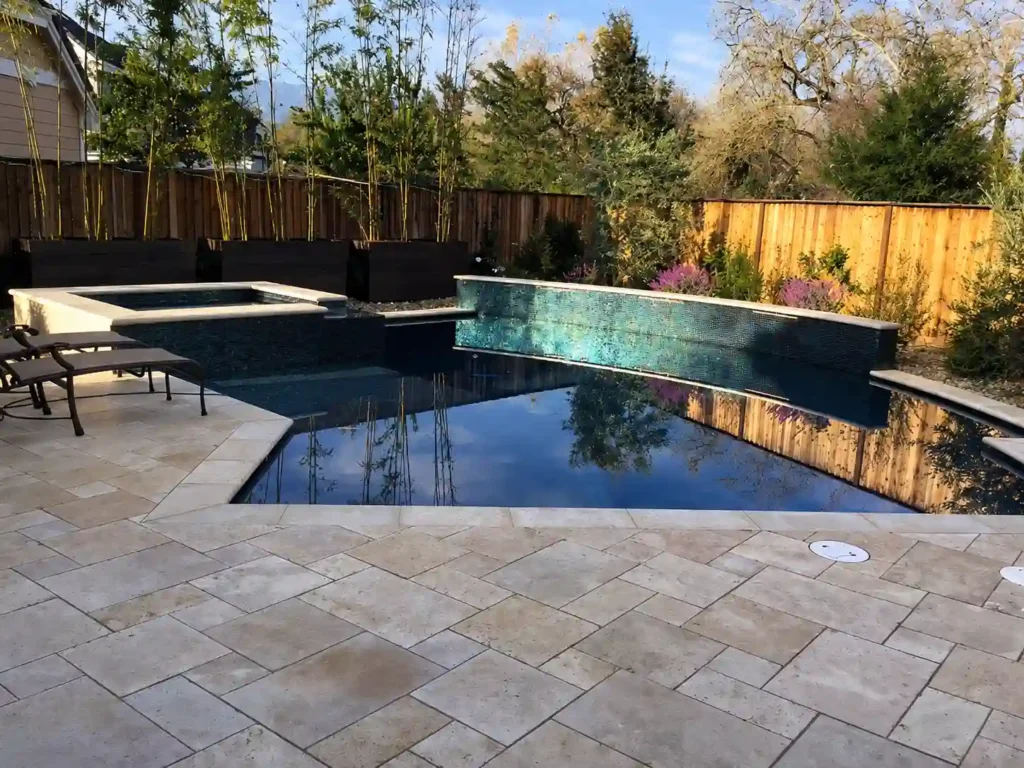
Your pool finish, deck surface, and hardscape materials are three of the most consequential decisions in any backyard build. According to the U.S. Environmental Protection Agency, conventional paving materials like asphalt can reach surface temperatures of up to 152°F at midday, while cooler pavement alternatives in an Arizona pilot study stayed 10°F to 16°F cooler.
That gap in surface temperature directly shapes every deck material recommendation we make. Get these choices right, and your outdoor space will look cohesive, hold up over time, and add real value to your home. Get them wrong, and you are dealing with surfaces that crack, fade, overheat, or simply do not work together visually.
For homeowners across the Tri-Valley Area, where summers are long and outdoor living season stretches well into fall, these decisions carry extra weight. At Advantage Pools Bay Area, we have been helping Bay Area families navigate them for over 17 years. This guide walks you through the key options so you can go into your project with a clear picture of what works and why.
What Pool Finishes Actually Do and Why the Choice Matters
A pool finish is the interior surface that lines your pool shell. It affects how your water looks, how the surface feels underfoot, how easy the pool is to maintain, and how long before you need to resurface.
Plaster is the traditional choice. It gives pools that bright, clean white appearance and is typically the most straightforward option at the outset. White plaster reflects light beautifully and keeps water looking crisp. Standard plaster is more porous than aggregate finishes, making it more susceptible to staining and etching over time, particularly in areas with variable water chemistry.
Pebble and aggregate finishes blend small stones, quartz, or glass beads into the plaster base, creating a textured surface that is harder, more durable, and more resistant to chemical wear. The texture adds traction, which matters for families with children. Colors range from natural earth tones to deep blues and greens, giving you real control over how your water appears from the surface.
Quartz finishes sit between standard plaster and full pebble surfaces. They offer improved durability and a smoother feel than pebble while holding color better than plain plaster. For homeowners who want a refined look without heavy texture, quartz is worth serious consideration.
Glass tile finishes are the premium tier. They are non-porous and highly resistant to fading and chemical exposure. They are most commonly used as accent features along waterlines or steps, though full-glass-tile applications are used in high-end builds. The finish you choose should be matched to how you use the pool, how much ongoing maintenance you want to commit to, and the overall aesthetic of your backyard.
Deck Materials: Comfort, Safety, and Surface Temperature
Your pool deck takes more foot traffic, sun exposure, and wet-dry cycling than almost any other surface in your yard. Material selection here is not just about appearance.
Surface temperature is one of the most overlooked factors in deck selection. In the Brentwood and Tri-Valley region, where summer temperatures regularly climb into the 90s and beyond, a deck that retains heat can make barefoot walking genuinely uncomfortable. That EPA data on pavement temperatures is not abstract. It is the practical reason we prioritize lighter-toned, lower-absorption surfaces in our deck recommendations.
Stamped concrete is one of the most versatile options available. It can replicate the look of stone, slate, or tile, and it accepts color treatment, giving you a wide range of design possibilities. When properly sealed and reinforced, it is durable, low-maintenance, and holds up well across seasons. A texture finish improves slip resistance around the pool edge.
Paver systems offer a different set of advantages. Because pavers are individual units set into a prepared base rather than a monolithic pour, they handle ground movement well. If a section settles or a unit cracks, it can be replaced without disturbing the entire deck. We work with Calstone and Basalite paver systems, both of which offer extensive color and profile options designed for long-term outdoor performance.
Exposed aggregate concrete gives you a textured surface with built-in natural slip resistance. The aggregate finish scatters light rather than absorbing it, which helps manage surface temperature. Travertine and other natural stones bring a resort-quality look to residential projects and stay cooler than many synthetic surfaces thanks to their thermal mass properties, though they require periodic sealing.
You can explore our full range of options through our pool deck installation services.
Hardscape: Tying the Entire Backyard Together
Hardscape covers all the non-plant, non-water elements of your outdoor space: patios, walkways, retaining walls, steps, and seat walls. It is the framework that connects the pool area to the rest of the property.
The most important principle in hardscape selection is cohesion. Your patio surface, walkway material, and pool deck do not have to be identical, but they need to work together visually. A consistent material palette, even with variation, reads as intentional design. Mismatched surfaces at different scales and in different colors can make a well-built backyard feel disjointed.
Concrete patios are the backbone of most Bay Area backyard projects. Stamped and colored concrete allows you to extend the visual language of your pool deck into the broader patio area, creating a seamless flow from the water’s edge to your outdoor kitchen or seating area. Our concrete patio and hardscape installation covers everything from standard flatwork to custom decorative finishes.
Paver patios offer flexibility and repairability. For larger projects where the patio and pool deck are part of a single integrated design, using the same paver system across both surfaces creates a clean, unified result. Retaining walls, steps, and seat walls should reflect the same material direction, whether poured concrete, natural stone, or stucco-finished masonry.
When hardscape is planned alongside pool construction from the beginning, the result is a backyard that feels designed rather than assembled. Our team handles custom pool construction and full backyard hardscape together, enabling better drainage planning, structural coordination, and a cohesive finished product.
How These Three Elements Work Together
The strongest backyard builds treat pool finish, deck material, and hardscape as a connected system. A deep charcoal pebble finish pairs naturally with light travertine or buff-toned pavers, creating contrast that draws the eye to the water. A bright white plaster finish works well with warmer concrete tones and natural wood accents.
Beyond aesthetics, these elements need to function together. Drainage gradients on the deck need to account for how water moves through the broader hardscape. Coping material bridges the finish and the deck and needs to coordinate with both. Expansion joints in concrete flatwork need to be planned in relation to where the pool shell meets the surrounding surface. When we design outdoor living spaces alongside pool and hardscape work, every element is planned from the start to fit together structurally and visually.
Built in Brentwood, Trusted Across the Bay Area
We are a licensed and insured pool construction and outdoor living company serving the Tri-Valley Area from our base in Brentwood, CA. For over 17 years, we have designed and built custom pools, pool decks, concrete patios, and full backyard hardscape for homeowners across the Bay Area. We handle every phase in-house, from design and engineering through permits, construction, and finishing.
If you are planning a new pool, a deck upgrade, or a full backyard transformation in the Brentwood or Tri-Valley Area, reach out to our team through our pool and hardscape services page to start a conversation about your project.